
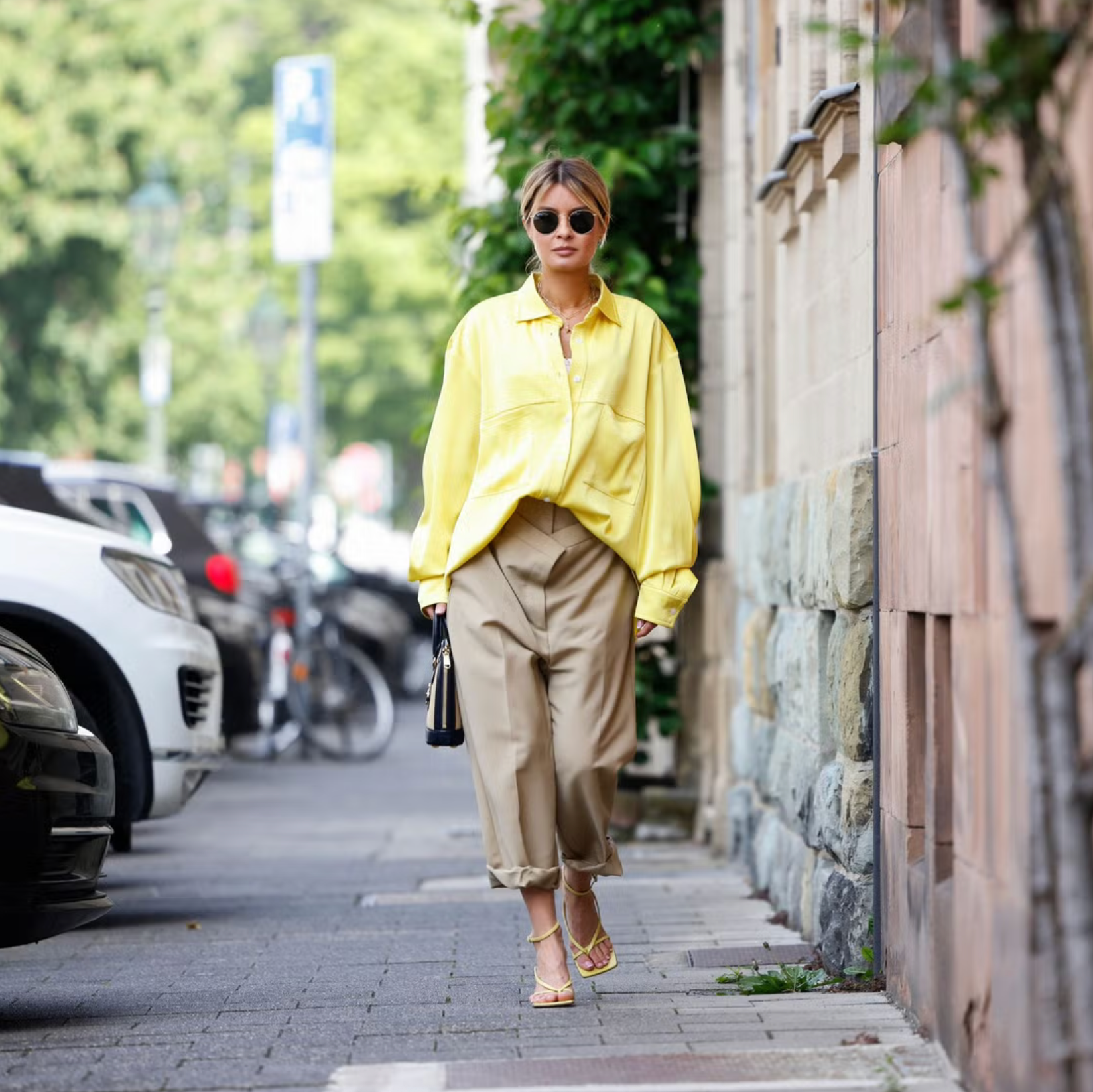
Gen Z has called time on the styling trick, but are other generations listening?
Do you still French tuck? Your response is likely indicative of your generation: Gen Z or, well, not. After nearly a decade of dominance, this styling hack—where you tuck just the front of your shirt into the front of your pants and leave the back untucked—is over, at least according to a vocal segment of the youth. In its place has come oversized, relaxed silhouettes, which Gen Z is adamantly averse to tucking in, according to countless videos on Instagram and TikTok. Once the last word in nonchalant style, the act of slipping the front of your shirt into your trousers has been dubbed the “Millennial Tuck,” a “cringe” addition to an ensemble.
“Aren’t we being shamed for tucking things in now?” asked Alexa Chung in a recent interview with Harper’s Bazaar. “I will say I was trying something on the other day, and tucking it in felt weird. I immediately, instinctively, went for the tuck. Then I thought, ‘Oh no, wait, that feels weird.’ It changed on a dime. Wednesday, we were tucking; Thursday, we were not.”
“Wednesday we were tucking, Thursday we were not”
It used to be straightforward: you tucked in, or you didn’t. In was pristine and more polished. Out was more relaxed—even sloppy, to some. In 2013, the street style crowd embraced something in between: the half-tuck, in which one half of the button-down shirt front was left hanging over trousers. It was an easy way to style an item most of us already own. Next came the French tuck, where just the front of the top is tucked in while the back hangs loose.
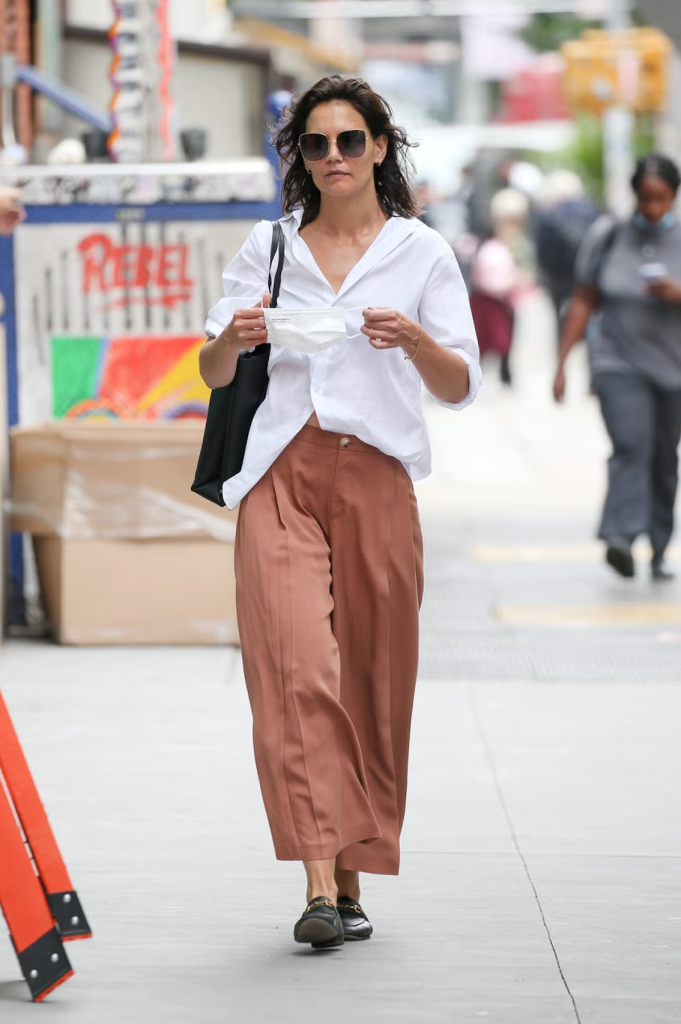
Katie Holmes doing the Half Tuck in 2021
The origins of the look are hard to pinpoint. Some say Demna’s Vetements did it first; others argue it was a French street style thing. But the French tuck went mainstream once Queer Eye’s Tan France brought it to the masses. When the show was revived to huge acclaim in 2018, the stylist employed the styling trick as a means to add subtle polish to the Fab Five’s subjects. It became so ubiquitous that Brie Larson gave Oprah a quick tutorial at the 2019 Women in the World Summit. The tactic was considered, but relaxed. And most importantly, it articulated a waist without looking as if you tried too hard to do so.
“The French tuck is very flattering, which is why it was popular for so long,” says Harper’s Bazaar U.K. contributing fashion editor Miranda Almond. “It has a clever illusion of elongating your legs and nipping in the waist to give an outfit shape. As a body styling hack, it is still very useful. It has been used in countless fashion campaigns partly because of that, but it also adds a little effortless cool, that je-ne-sais-quoi brand of French style that we all hanker for.”
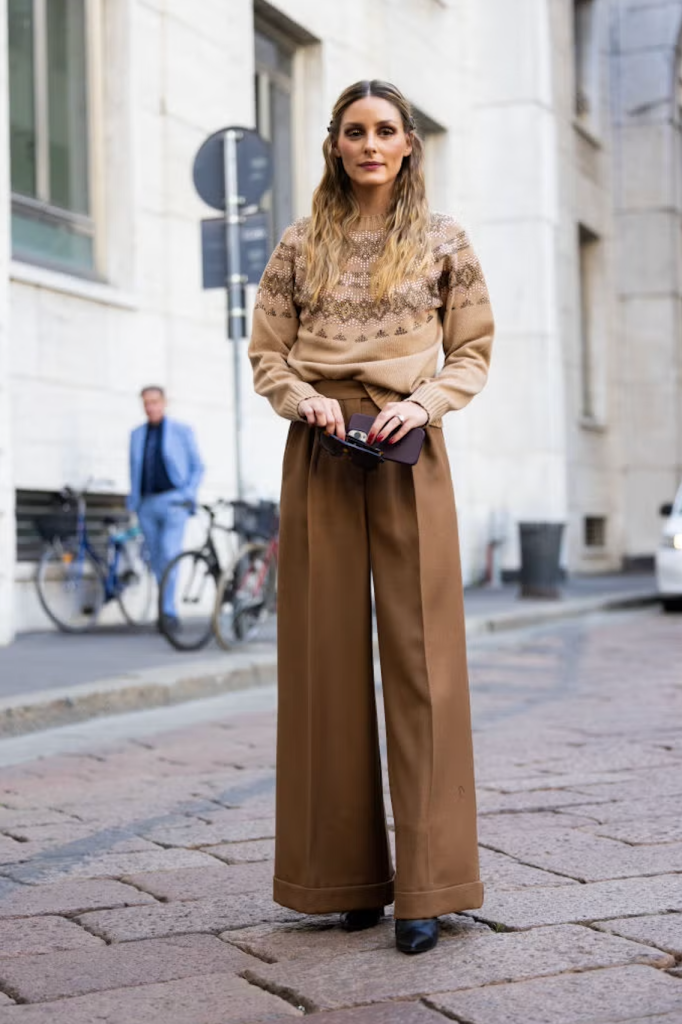
Olivia Palermo French tucking in 2022
“There’s something so artfully undone about it,” agrees personal stylist Anna Berkeley, whose own clients have moved on to a fuller front tuck, with the back still hanging free. “The ‘I-threw-this-on-and-off-I-go’ attitude. The French tuck was pretty easy to master, and anything with the word ‘French’ in it must be cool, right?”
But such is the way in fashion: the winds have changed, and a French tuck reckoning has arrived. What once felt fresh and modern, Gen Z says, is now a totem of middle-age-dom. As a society, we are still coming to terms with the idea that age doesn’t imply irrelevance or mandatory dowdiness, but the generation below tends to question the style choices of the generation above. For kids, dressing like your parents has always been the height of uncool. As style coach Therese Bassler says, “Each generation wants to make their own mark somehow.” She stresses that her teenage daughter likes to borrow from her wardrobe, although, mercifully, she is yet to get on board with her bouclé set from The Row.
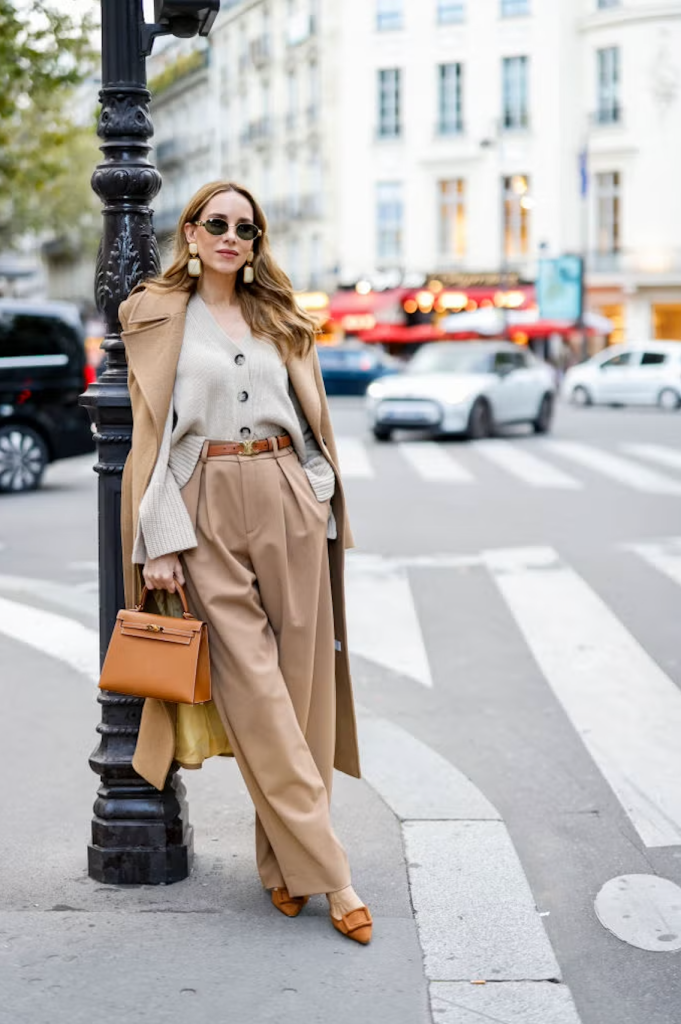
Alexandra Lapp working the French tuck in 2023
“It’s the natural way of things to dismiss the generation above, isn’t it?” says Berkeley. “You think you know better, when actually it would be more useful to try and see what you actually like and dislike about that generation’s look. Don’t be critical, be curious.”
As dress codes reflect the world we live in, there is a case to be made that Gen Z’s preference for oversized shapes taps into a more progressive approach to gender—and perhaps there is something to be learned from their more personality-led, individual way of dressing. “Gen Z are much more gender fluid than previous generations,” says Almond. “It’s not about making yourself overtly feminine or womanly.” (Read: defining your waistline.) “I find that they’re more eclectic with their style, and much more drawn to pre-loved. They veer away from prescribed looks. For example, the idea that you must tuck something in. I like to keep up with what’s cool in their eyes and how they wear things. I really keep an eye out for it, because I think they can teach us things.”
For those interested in tapping into the oversized, definitively untucked era, it’s about managing the volume against your frame. Berkeley, who runs body-shape styling app Think Shape, says understanding your proportions is key. “Belting oversized jackets, shirts, and knits helps to control the size of looser silhouettes—as does rolling sleeves,” she explains. “It looks good, but you need to know your leg length and where to place that belt on your body so you don’t ruin all your proportions.”
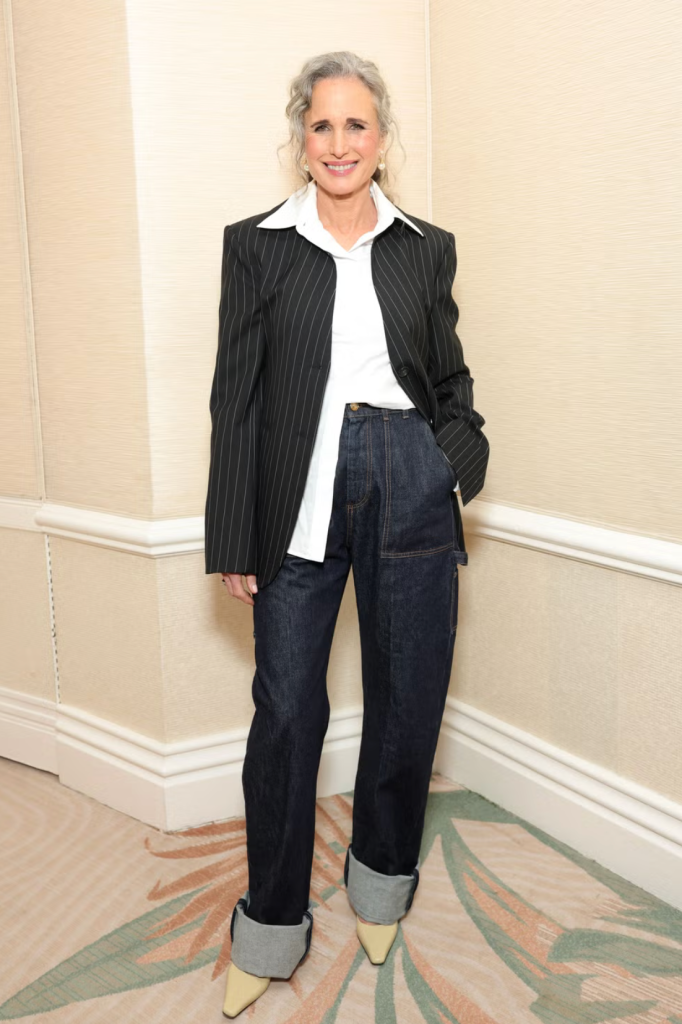
Andie McDowell and the Half Tuck in 2025
Not everyone is going to abandon the French tuck overnight. One of the advantages of aging is that we get to know ourselves better and, with a bit of luck, have more confidence than we did in our twenties. We know what suits us in spite of what’s trendy. At Recollection, Bassler’s chic vintage pop-up series (the latest of which is open in Notting Hill now), she anticipates seeing more shoppers styling their layers this way. “A French tuck can never be over—it has more to do with defining shape rather than trendiness,” she says. “Let’s not forget that Gen Z is still in their explorative phase when it comes to fashion, and it takes a while to distinguish what is transient from what actually works for you. Most of my clients are well into their thirties or forties and are still navigating fashion. Nothing needs to change if it’s working for you.”
By Ella Alexander
Pothos by Getty Images


 LatinGlam
 Latin Glam


