
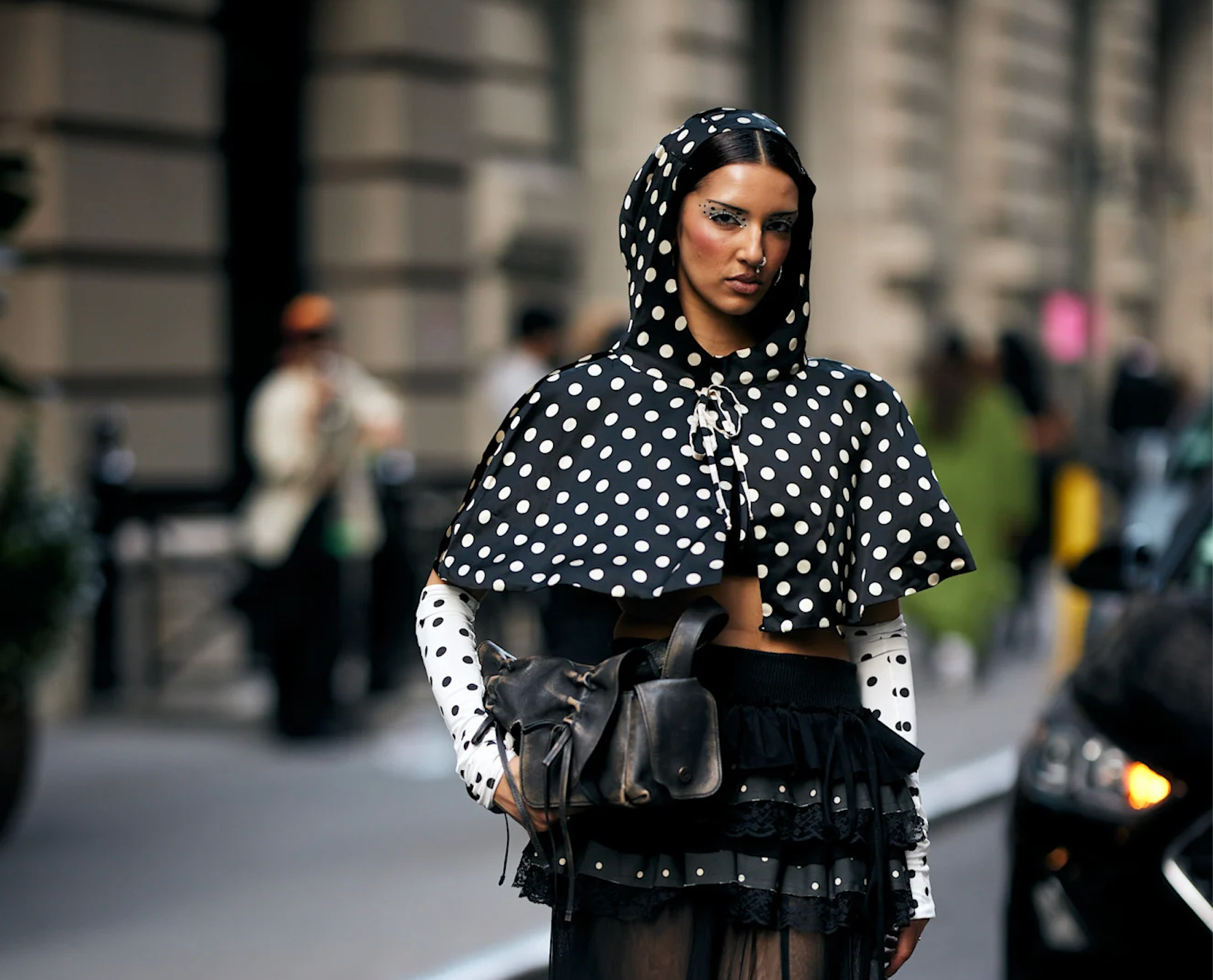
At New York Fashion Week, grit and glamour converged in a singular, only-in-New-York style.
For years, fashion has been obsessed with the idea of good taste.
Minimalism, restraint, polish and quiet luxury became shorthand for sophistication, creating an increasingly narrow definition of what it meant to look modern, expensive and culturally relevant.
But at New York Fashion Week, that conversation began to shift.
Across runways, presentations and the streets surrounding the shows, designers embraced something far more interesting: contradiction. Glamour met grit. Refinement collided with imperfection. Elegance existed alongside attitude, noise and personality.
And perhaps nowhere could that evolution have felt more natural than in New York.
Fashion Gets Its Personality Back
The most compelling moments of the week were not necessarily the most pristine.
Instead, designers leaned into clothes that felt lived-in, individual and emotionally charged. Styling became less about perfection and more about character. Unexpected proportions, layered textures, worn-in details and dramatic silhouettes challenged the idea that sophistication has to look controlled.
The result was fashion with tension.
A polished coat could suddenly feel rebellious. Eveningwear could carry downtown energy. Street influences appeared next to traditional luxury codes without either side losing its identity.
Rather than asking whether something was tasteful, the more interesting question became: Does it have a point of view?
That distinction matters.
Fashion has always been at its strongest when it reflects culture rather than simply decorating it.
Grit Meets Glamour
New York has never been a city of one aesthetic.
Its visual identity is built from collisions: uptown and downtown, old money and new ambition, Wall Street and the subway, Fifth Avenue polish and Lower East Side experimentation.
This season captured exactly that duality.
The clothes suggested a renewed appetite for glamour, but not the distant, untouchable glamour of another era. This was glamour with movement, imperfection and edge.
Sequins could coexist with distressed textures. Sharp tailoring could feel slightly undone. Feminine silhouettes could appear alongside oversized outerwear, utilitarian pieces or tougher accessories.
The message was subtle but unmistakable: luxury no longer needs to separate itself from reality.
Instead, it can absorb it.
Beyond the Era of Quiet Luxury
The dominance of quiet luxury helped reestablish craftsmanship, longevity and understatement as important fashion values. But after several seasons of restraint, the industry appears increasingly ready for something more expressive.
That does not necessarily mean a return to excess.
It means permission.
Permission to mix references. Permission to be glamorous without being conservative. Permission to embrace color, texture, nostalgia or even a little visual chaos.
Most importantly, it means moving beyond the assumption that there is only one correct way to look sophisticated.
The new fashion conversation feels broader, more personal and far more culturally alive.
New York as the Perfect Backdrop
There is something uniquely New York about rejecting the rules of good taste.
The city has always transformed what might initially appear imperfect, aggressive or unconventional into something desirable.
That tension is part of its creative DNA.
Fashion in New York works best when it feels connected to the streets outside the venue, when the runway reflects the energy of the subway platform, the nightclub, the corner store, the gallery opening and the penthouse simultaneously.
This season, those worlds felt closer together.
Grit was not treated as the opposite of glamour.
It became part of glamour itself.
A More Interesting Definition of Style
Ultimately, moving beyond “good taste” does not mean abandoning beauty, craftsmanship or elegance.
It means expanding their definitions.
Fashion becomes far more compelling when personal style is allowed to be contradictory, emotional and occasionally difficult to categorize.
That may be the biggest takeaway from New York Fashion Week: the industry does not need another rigid aesthetic to replace the last one.
It needs individuality.
And in a city built on reinvention, fashion appears ready once again to celebrate the unexpected.
Because the future of style may not be about looking tasteful.
It may simply be about looking unmistakably like yourself.
Photo via Launchmetrics/Spotlight


 LatinGlam
 Latin Glam


