
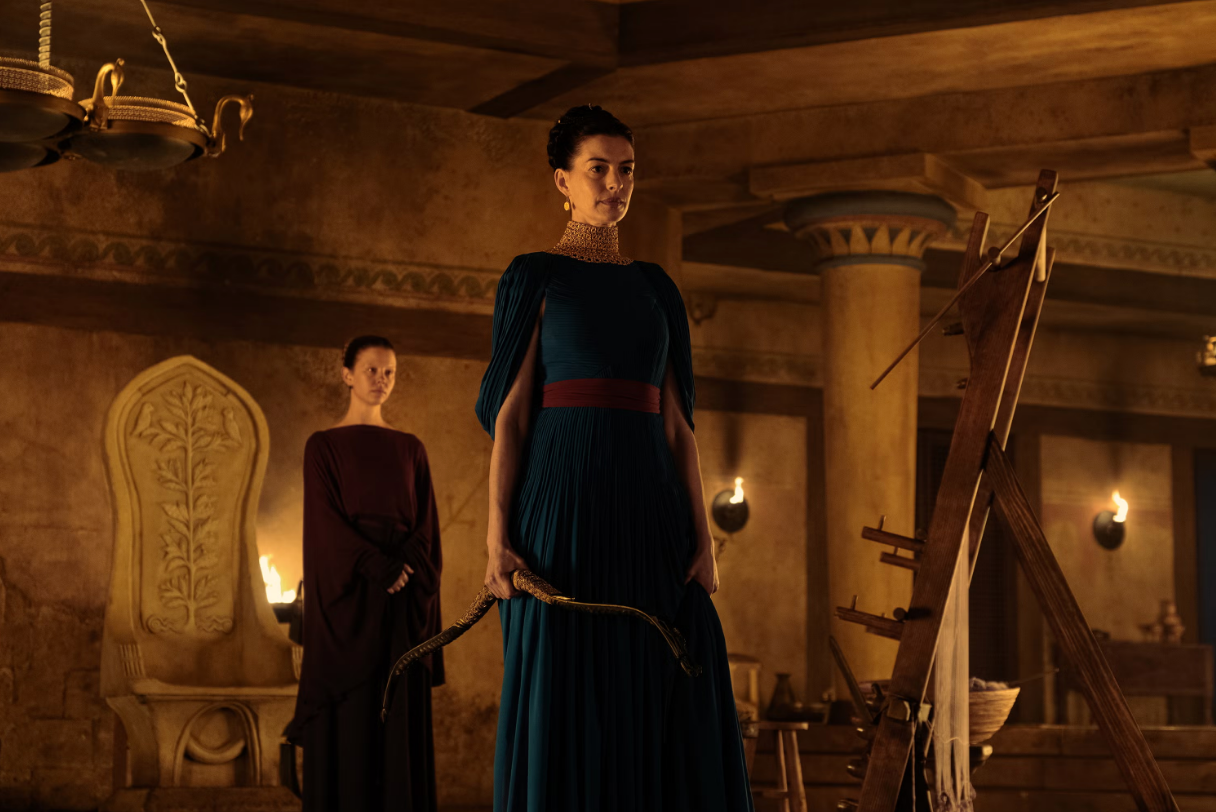
Christopher Nolan’s The Odyssey opens with a simple line against a black screen: “It is a time of apparent magic…”
It is an appropriate introduction to a story filled with gods, monsters, witches, giants, and impossible journeys. Yet Nolan’s adaptation of Homer’s nearly 3,000-year-old epic is most compelling not because of its mythology, but because of how deeply human it feels.
With a runtime of 172 minutes, the filmmaker had to make difficult choices—combining storylines, eliminating characters, and reimagining some of the poem’s most iconic moments. The result is a version of The Odyssey that feels grounded, emotionally complex, and surprisingly intimate despite its monumental scale.
Rather than allowing the gods to control every aspect of the story, Nolan places responsibility in the hands of his characters. His Odysseus, played by Matt Damon, is not simply a heroic warrior trying to return home. He is a traumatized veteran, a husband, a father, and a man forced to confront the consequences of his own intelligence and ambition.
The true magic of Nolan’s film lies in that humanity.
Odysseus Is Haunted by the Price of His Genius
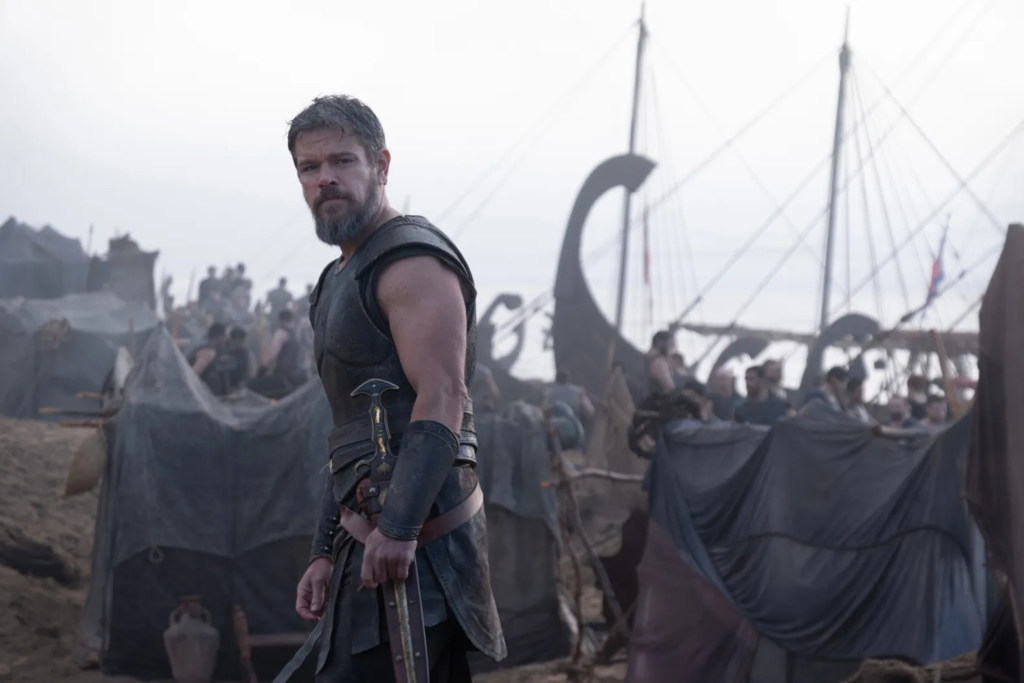
The most significant transformation in Nolan’s adaptation is the characterization of Odysseus.
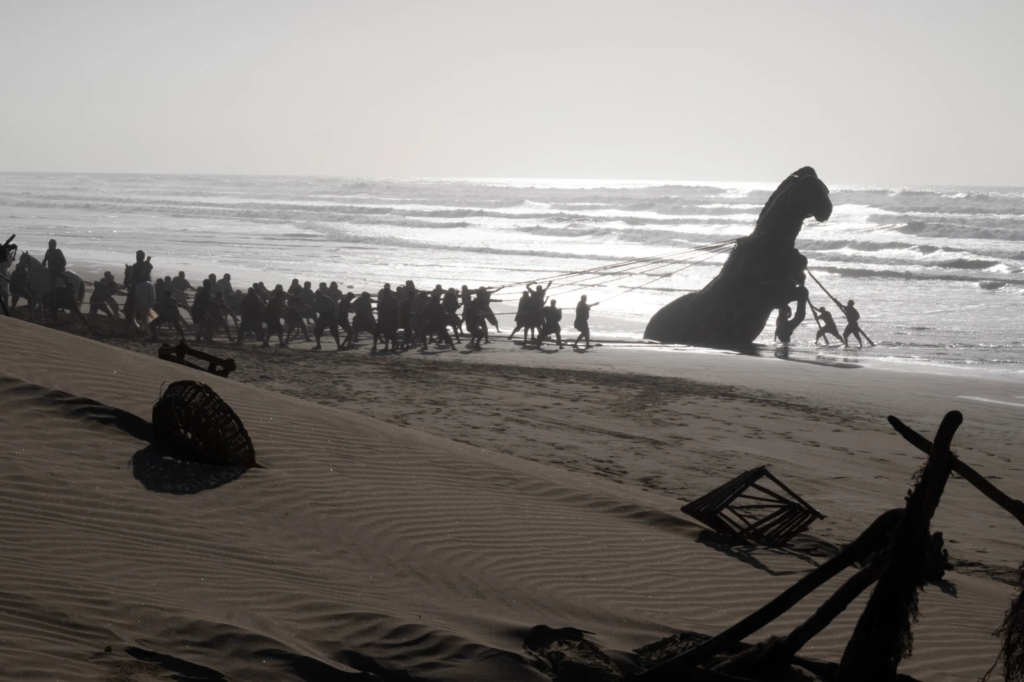
In Homer’s poem, Odysseus is celebrated for his intelligence, courage, and tactical brilliance. Nolan preserves those qualities but adds a powerful layer of guilt. His Odysseus is haunted by the destruction of Troy and by the suffering caused by the Trojan Horse—the very invention that established his reputation as a military genius.
The parallel with Nolan’s previous film, Oppenheimer, is difficult to ignore. Both stories center on brilliant men forced to reckon with the devastation created by their own ideas.
Matt Damon has described the role as a story not only about homecoming, but also about a man confronting the cost of his ingenuity. In the film, Odysseus understands that the Trojan Horse was not simply a clever strategy. It was a deception disguised as a peaceful offering, followed by murder and destruction.
His journey home becomes more than a physical voyage. It is an attempt to live with what he has done.
That emotional conflict makes Odysseus feel less like an untouchable hero and more like what Emily Wilson’s celebrated translation of the poem calls him: “a complicated man.”
The Sacred Meaning of Hospitality
One of the film’s central themes is what the characters refer to as “Zeus’s law,” a sacred obligation to welcome guests and treat them with dignity.
The idea is based on the ancient Greek concept of xenia, a moral code governing the relationship between hosts and visitors. In a world where travel was dangerous and shelter could mean survival, hospitality was not merely good manners—it was a sacred responsibility.
Nolan expands the concept into something closer to a universal rule of human decency.
The irony is that Odysseus himself violates this principle through the Trojan Horse. The Greeks arrive disguised as a gift, enter the city under false pretenses, and kill the people who welcomed them.
That contradiction follows Odysseus throughout the film. He is forced to confront the fact that his most celebrated accomplishment was also a profound betrayal of trust.
The Gods Remain in the Shadows
Homer’s poem is filled with gods who intervene directly in human affairs. Zeus, Poseidon, Hermes, Athena, Helios, and Persephone all influence Odysseus’ fate.
Nolan removes most of them from the screen.
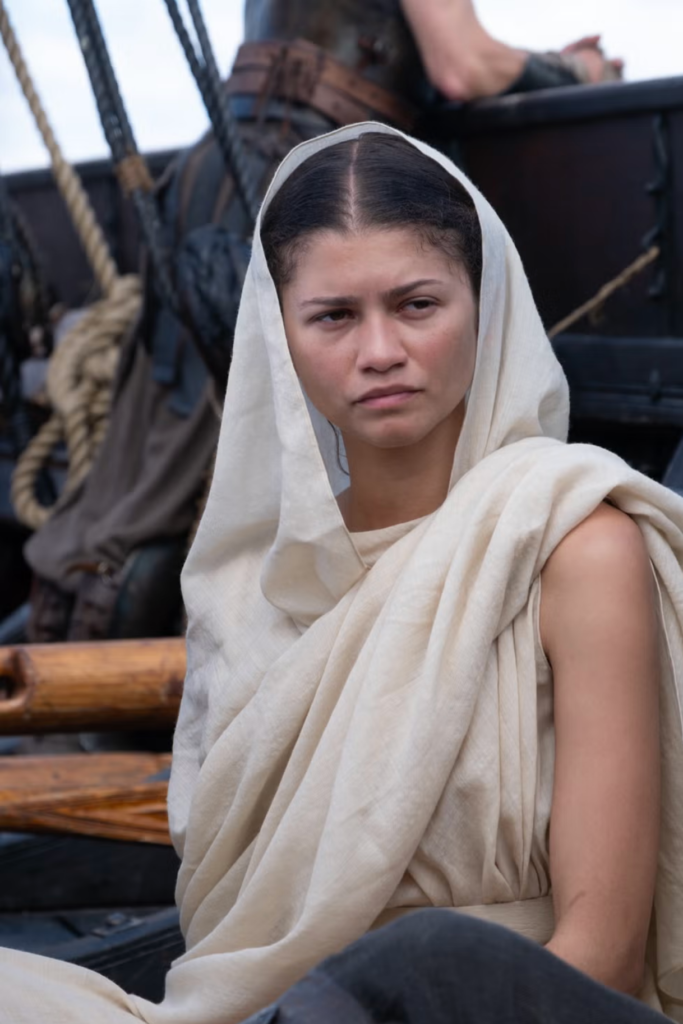
Athena, played by Zendaya, appears as Odysseus’ confidant, but her presence is deliberately ambiguous. She sometimes takes the form of a Trojan woman whose death he witnessed, raising the possibility that she may be less a literal goddess and more a manifestation of his guilt.
Poseidon never physically appears. Instead, his anger is felt through storms and violent seas. Zeus exists through thunder, lightning, and the moral code invoked in his name.
This choice makes the divine world feel more consistent with how ancient people may have experienced it. The gods are not characters moving humans like pieces on a board. They are invisible forces interpreted through nature, fear, and belief.
More importantly, their absence places responsibility on the humans themselves. Odysseus cannot simply blame the gods for everything that happens. His choices have consequences.
Antinous Becomes a More Personal Enemy
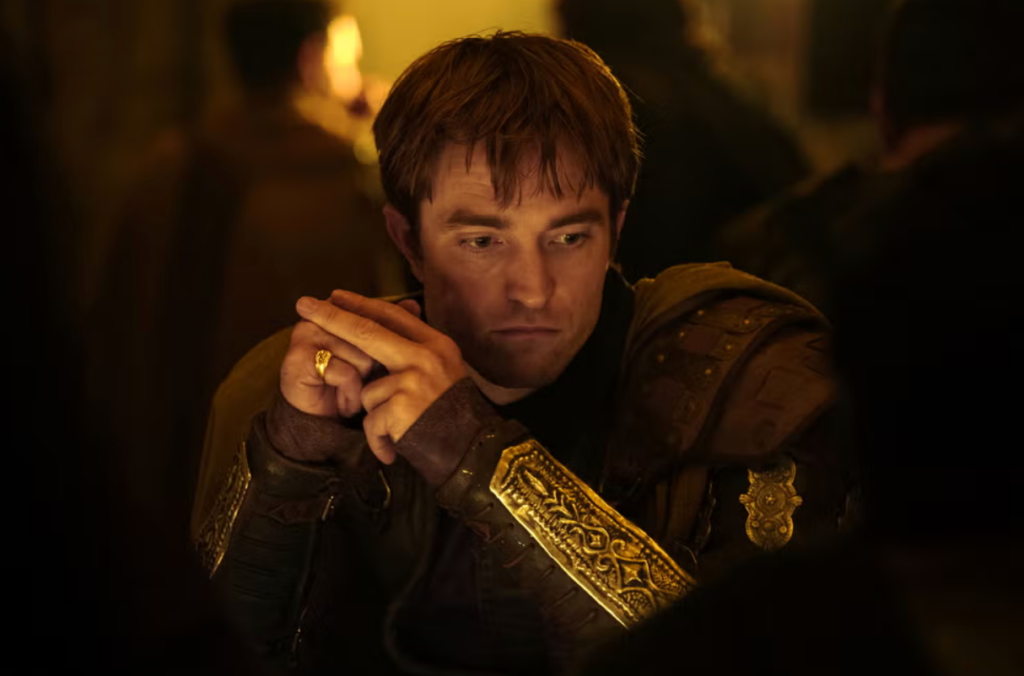
Nolan also expands the character of Antinous, played by Robert Pattinson, turning him into more than the arrogant leader of Penelope’s suitors.
The film connects Antinous’ past to Sinon, the Greek soldier played by Elliot Page who helped convince the Trojans to accept the wooden horse. As young men, Antinous attempted to avoid military service by switching places with Sinon, but Odysseus discovered the deception and sent Sinon to war.
That decision gives Antinous a personal reason to resent Odysseus and adds emotional weight to their eventual confrontation.
Nolan also shows Antinous hunting alongside Odysseus as a boy, explaining why he later recognizes Odysseus’ distinctive archery technique during Penelope’s test.
In Homer’s poem, Antinous is the first suitor to die. In Nolan’s film, his death is saved for the final confrontation, creating a more cinematic and emotionally satisfying climax.
The Film Makes Odysseus More Faithful
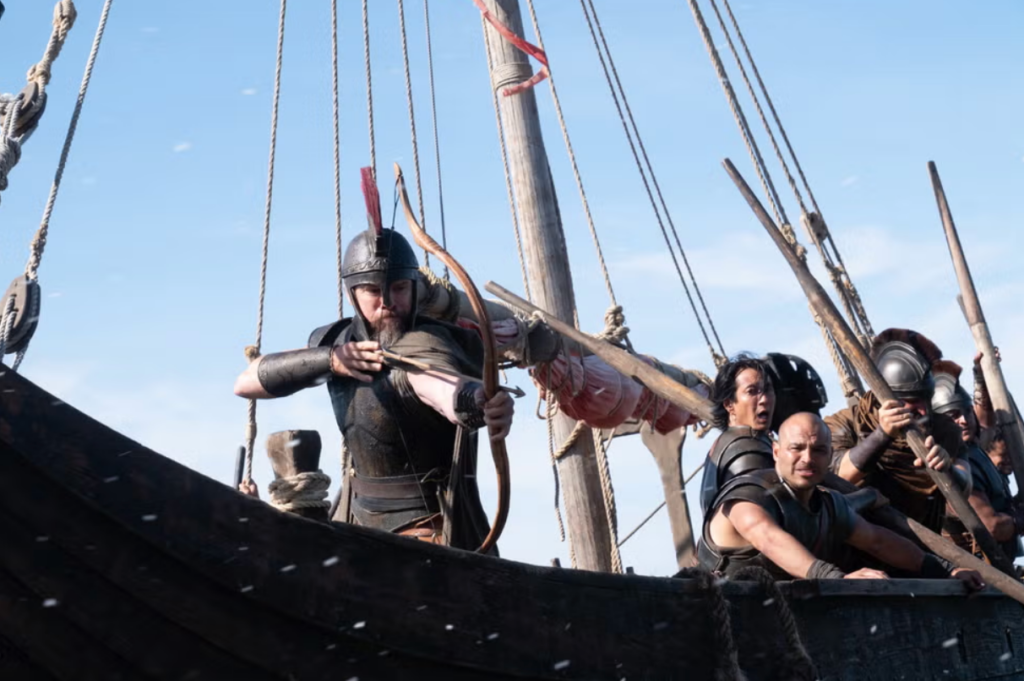
Homer’s Odysseus spends extended periods with Circe and Calypso, and both relationships contain romantic and sexual elements.
Nolan softens those aspects of the story.
Odysseus does not remain with Circe as her lover. He persuades her to restore his men after she turns them into pigs, and they leave soon after.
His seven years with Calypso are also portrayed differently. Instead of an extended romance, Calypso feeds him the lotus flower, causing him to forget his home and family. The storyline combines her role with that of the Lotus Eaters, whose magical plant erases the desire to return home.
This version makes Odysseus’ devotion to Penelope more central and allows their reunion to carry greater emotional power.
Penelope Is Stronger and Less Idealized
Anne Hathaway’s Penelope is not simply the endlessly patient wife waiting for her husband.
She is sharper, more guarded, and hardened by 20 years of uncertainty. She has protected her household, raised Telemachus, and resisted an entire palace full of suitors while never knowing whether Odysseus was alive.
Nolan removes the final test involving the couple’s immovable bed, one of the most famous moments in Homer’s poem. Instead, Penelope recognizes Odysseus through the way he handles his bow and through an Athena-shaped pin she gave him before he left for war.
The change makes their reunion more immediate while preserving the sense that only Penelope truly knows the man who has returned.
Mythic Episodes Are Reimagined
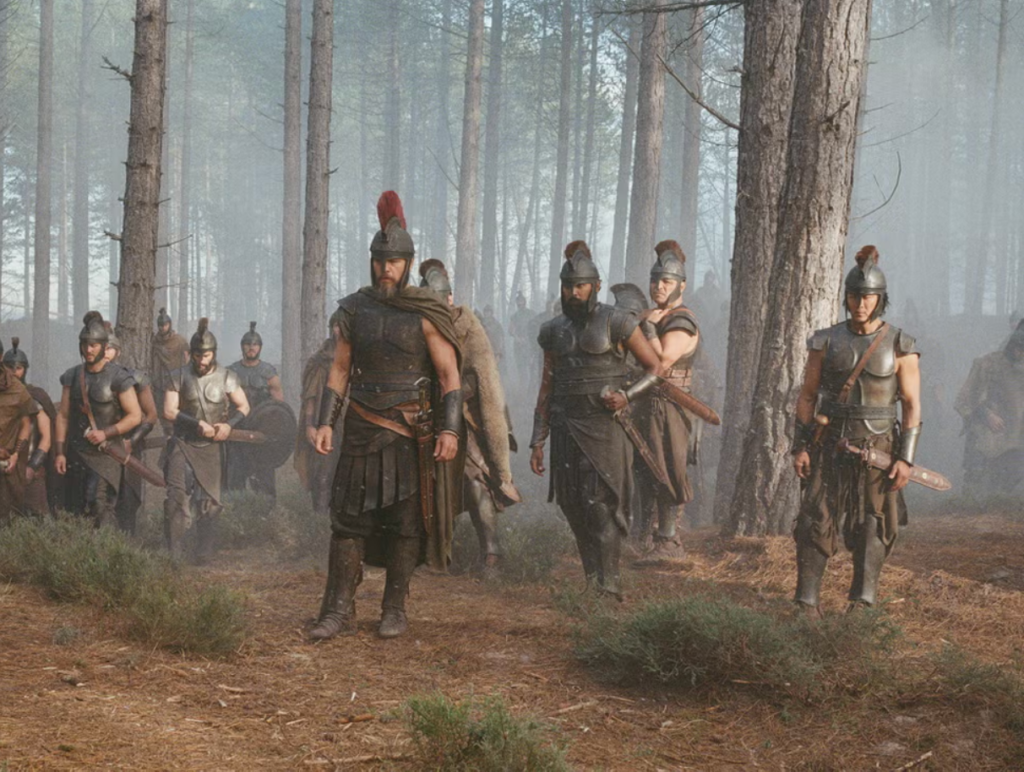
Several of Odysseus’ most famous adventures are condensed or reworked.
The Lotus Eaters are absorbed into the Calypso storyline. The island of Aeolus and the bag of winds are omitted entirely. King Alcinous, Queen Arete, and Princess Nausicaa also disappear, allowing Odysseus to travel directly from Calypso’s island to Ithaca.
The Laestrygonians remain giants, but Nolan transforms them from cannibals throwing boulders into towering, silver-armored warriors who attack Odysseus’ men in a dark forest.
The Cyclops sequence also removes one of Odysseus’ most famous tricks. In Homer’s version, he tells Polyphemus his name is “Nobody,” creating a clever escape when the injured Cyclops calls for help. Nolan skips that deception, focusing instead on the physical danger and the consequences of Odysseus’ pride.
These changes simplify the narrative without eliminating the sense of wonder and horror that defines the original poem.
A New Ending Without Divine Intervention
Homer’s epic ends with Athena stopping a final cycle of violence between Odysseus and the families of the slain suitors.
Nolan chooses a more human and morally complicated conclusion.
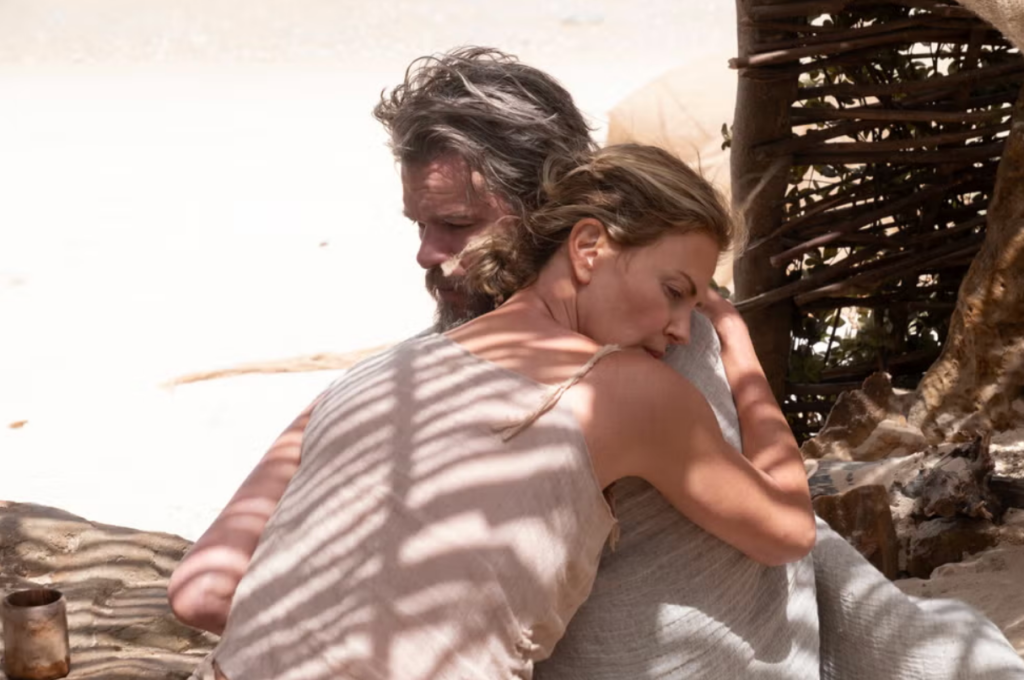
After killing the suitors, Odysseus is exiled for violating Zeus’s law. Penelope leaves Ithaca with him, and the two sail away together. Telemachus remains behind to rule as king.
The ending denies Odysseus an easy divine pardon. He regains his family, but he must still live with the consequences of his actions.
As they sail toward the horizon, Penelope asks why their story will be remembered in song. Odysseus answers that songs are all future generations will have left of them.
It is a fitting conclusion for a story that has survived for thousands of years through poets, performers, translators, and now filmmakers.
An Ancient Story for the Modern World
Nolan’s The Odyssey does not modernize Homer by stripping away the mythology. Instead, it discovers the emotional truth beneath it.
The monsters remain. The seas are still violent. Men are transformed into pigs, giants stalk the forests, and gods seem to speak through thunder and storms.
But the film’s real focus is guilt, loyalty, masculinity, marriage, grief, and responsibility.
By reducing divine intervention and deepening the emotional lives of its characters, Nolan transforms one of history’s most famous heroes into something more complicated and recognizable: a man trying to return home after becoming someone he no longer fully understands.
In that sense, The Odyssey is not only a story from the ancient world. It is a story about every generation that has inherited the mistakes of the past—and the people who must decide what to do with them.


 LatinGlam
 Latin Glam


