
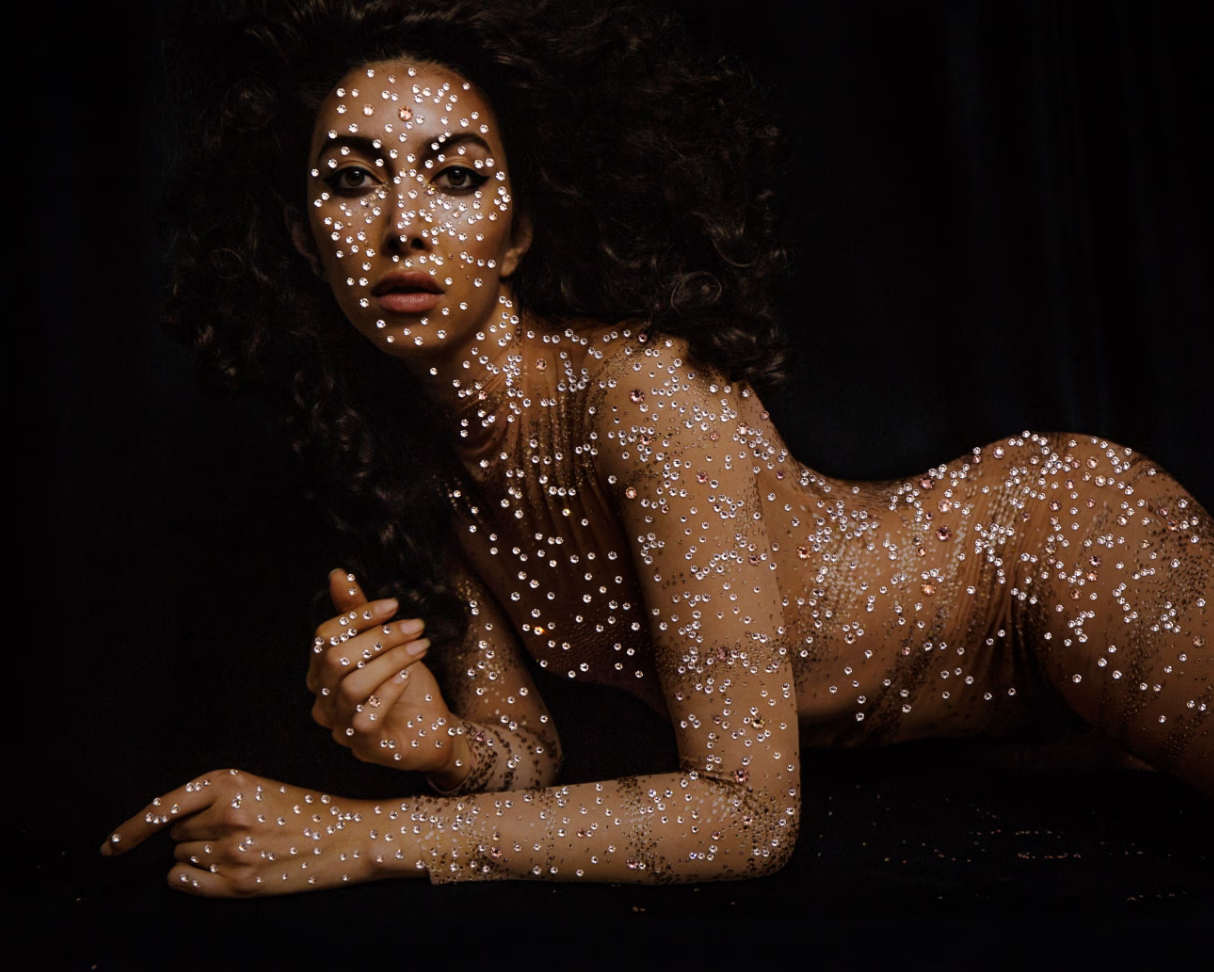
The Guatemalan American artist is challenging conventional beauty standards through photography, fashion and powerful explorations of identity and representation.
Beauty has always been shaped by images. From fashion campaigns and magazine covers to advertising and social media, the images we see influence how we understand glamour, identity and the standards we are encouraged to admire.
Artist and performer Martine Gutierrez is questioning who gets to create those images — and who gets to decide what beauty looks like.
With a multidisciplinary practice that spans photography, performance, fashion and self-portraiture, Gutierrez explores the complex relationship between identity, gender, culture and representation. Drawing on her American and Guatemalan heritage and Maya roots, she uses visual storytelling to challenge conventional narratives and expand the possibilities of how people see themselves reflected in contemporary culture.
Her work does more than question established beauty standards. It invites audiences to reconsider who has historically been included in the images that define them.
Rewriting the Rules of Representation
One of Gutierrez’s most recognized projects, Indigenous Woman, reimagines the visual language of a glossy fashion magazine to examine Indigenous identity, gender and cultural representation.
Created as an elaborate artist publication, the project places Gutierrez in multiple creative roles, including model, photographer and editor. Through this approach, she takes control of the images and narratives surrounding her identity rather than allowing traditional media conventions to define them.
The result is a compelling exploration of how representation is constructed — and how it can be reclaimed.
By adopting the aesthetics of fashion editorials and commercial imagery, Gutierrez exposes the assumptions that often lie beneath them. Her work questions the expectations placed on women, Indigenous communities and individuals whose identities have historically been marginalized or simplified by mainstream media.
The project has also received recognition within the broader art and fashion worlds, including attention from major cultural institutions such as The Metropolitan Museum of Art’s Costume Institute.
When Beauty Becomes a Conversation About Identity
For Gutierrez, beauty is not simply about makeup, clothing or appearance. It is also about power: who controls the narrative, whose experiences are visible and which faces are presented as aspirational.
Fashion and beauty have made significant progress in broadening representation, but questions remain about who gets to participate in shaping the industry’s visual culture.
Gutierrez approaches those questions through her art, using familiar images and formats to reveal how cultural expectations are created and reinforced.
Her work encourages viewers to look beyond the surface of a photograph. Every image carries choices about identity, perspective and visibility. By making those choices part of the conversation, she challenges audiences to question the standards they may otherwise take for granted.
That perspective is especially relevant in an era when images circulate globally within seconds and representation has become an increasingly important part of conversations about fashion, beauty and cultural identity.
A Different Kind of Beauty Influence
In an industry often driven by trends, product launches and the next viral look, Gutierrez represents a different kind of influence.
Her impact comes from changing the conversation rather than simply introducing another aesthetic.
She demonstrates that beauty can be a form of artistic expression, a means of examining cultural identity and a way to challenge established expectations. It can celebrate glamour while questioning the systems that determine which forms of glamour are recognized.
For LatinGlam, that distinction matters.
The future of beauty is not limited to discovering new products or identifying the next major trend. It also depends on recognizing the artists, creators and visionaries who are expanding the meaning of beauty itself.
Gutierrez’s work offers a reminder that representation is more than seeing different faces in familiar settings. It also means giving people the freedom to tell their own stories, shape their own images and define themselves on their own terms.
Because true beauty is not simply about fitting into the picture. Sometimes, it is about changing the picture entirely.


 Latin Glam


